
Inside the Portfolio of Sam Altman, the Father of ChatGPT: YC's First-Ever List of Its Highest-Earning Startups!
October 27, 2023
〈YC Startup Class〉
Since the generative AI boom, plenty of people have regretted not buying Nvidia stock. But before Sam Altman, the father of ChatGPT, joined OpenAI full time in 2020, he led YC, the world’s most successful startup accelerator, for about six years. The investments he oversaw during that time are well worth a close look. The next “Nvidias” and “OpenAIs” may already be in the making.
A few months ago, Y Combinator published “YC’s first-ever list of its highest-earning startups,” naming the 50 companies in the YC community with the highest net revenue for full-year 2022. It includes familiar names like Airbnb, Stripe and DoorDash, as well as several newcomers that are only two or three years old (the full list is at the bottom of this post).
About half of these 50 companies were accepted while Altman was leading YC. So you could say this is also a list of Altman’s bets on the most promising tech companies of the future. As a YC alum that went through the program in 2014, MixerBox was super curious about what’s on this list too.
Last year, these 50 companies generated more than $50 billion in combined revenue, or about NT$1.6 trillion. (Apart from a few public companies with published financial statements, YC did not disclose specific revenue figures for any company on the list, since those numbers are confidential.)
Here are more key stats about the companies on the list:
- These companies generated more than $50 billion in total revenue in 2022
- Together they have raised $40 billion; their combined valuation is $400 billion.
- 15 companies (30%) have exited, 12 of which are now public
- These 50 companies employ more than 70,000 people in total
- 74% of employees have the option to work remotely
- 70% have offices in the Bay Area
- 22% have offices outside the U.S.
- The vast majority of these companies were founded by 2 (55%) or 3 (32%) co-founders
- The three newest YC companies on the list are Whatnot (W20), Deel (W19) and Nowports (W19)
- The S12 batch appears most often, with Benchling, Coinbase, Instacart, SmartAsset and Zapier
- The W12, W14 and W15 batches tie for second, with 4 companies each
Unsurprisingly, most companies on the list have been around and operating for ten years or more. They include Airbnb, Stripe, DoorDash, Reddit, Dropbox, Coinbase, Instacart and others. Of these, DoorDash has arguably been the most impressive this year. Having only gone public in 2020, DoorDash has now beaten Uber Eats in the U.S. with a market share of over 60%, firmly establishing itself as the king of American food delivery platforms. Meanwhile, Airbnb beat market expectations in both its Q1 and Q2 earnings, and its stock is up 44% so far this year.
(Source: YC)
Becoming one of YC’s highest-earning companies in just 3 years! How did they do it?
The reason veteran alumni make the list is simple: the longer a company has been growing, the more time it has had to build truly stable profitability. Even so, quite a few very young companies managed to squeeze in! (Including several that went through YC within the past three years!) These companies are even more likely to include some of the future “Nvidias” and “OpenAIs.”
Take Scale AI, which was founded in 2016 and joined YC the same year. It builds data infrastructure to accelerate the development of artificial intelligence. Scale AI’s main business was originally labeling data used to train the machine learning models behind self-driving cars. It has since developed more data fine-tuning tools that customers like OpenAI, Meta and Microsoft use for model training.
YC also interviewed some of the young companies that went through the program within the past three years, letting them share firsthand what they’re doing right and what comes next.
Deel (W19), an all-in-one HR platform that makes it easier to manage an international workforce.
Deel co-founder Alex Bouaziz: We built the first global HR solution for companies that hire around the world. When you want to scale, when you want to go global, Deel lets you hire anyone, anywhere.
HR has never really been a truly global service, and we wanted to be the first real solution. Over the past few years, one thing we’ve done really well is aggregate all the data on global employment, global taxes and global benefits.
We now have more than 20,000 customers, from small companies all the way up to big names like Nike and the Royal Bank of Canada, and we charge a monthly fee per worker depending on the type of worker you want to hire (contractors, employees, global payroll and so on).
The idea is that you and a specific person you might want to work with are both on Deel’s platform, and they may need a visa or some other kind of help; we take care of that for you. Then businesses realize that with Deel, they can bring every type of worker, from any country, together in one place, and their company can survive and grow.
Whatnot (W20), a shopping platform for buying and selling trading cards, sneakers, fashion and more via livestreamed video.
Whatnot co-founder Grant LaFontaine: Whatnot is a livestream shopping platform and online marketplace. The original idea came from the fact that both co-founders were collectors themselves but couldn’t find a good platform to trade on.
At first, the Whatnot team didn’t focus on revenue or profit, and didn’t even track it, believing the best measures were sales volume or buyer and seller retention. But as the company scaled, the health of the business became more and more important. Is every sale losing money? Can this business scale in the long run? GMV, revenue, contribution margin and gross margin are probably what Whatnot cares about most now.
Which sectors are hottest?
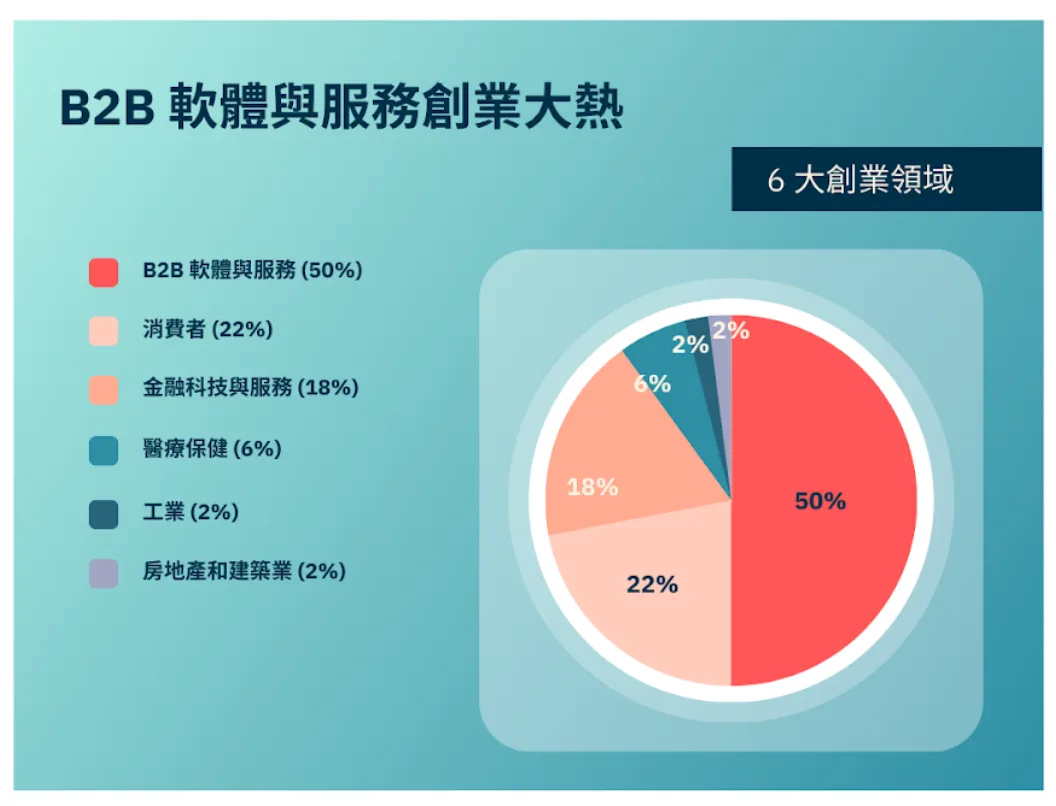
Overall, YC groups the 50 companies on the list into six sectors: “B2B software and services (50%),” “consumer (22%),” “fintech and financial services (18%),” “healthcare (6%),” “industrials (2%)” and “real estate and construction (2%).”
Clearly, “B2B software and services” accounts for half. Even if “consumer,” “fintech and financial services” and “healthcare” include plenty of consumer-facing products and services, together they still make up less than the B2B category, which shows how much weight today’s Silicon Valley founders and investors put on this sector.
(Source: YC)
Why did YC publish this list?
The thinking behind YC’s decision to publish this list is actually a very important reminder.
On its official blog, YC said it created and published this first-ever list of the top 50 Y Combinator companies by net revenue to emphasize what startups should be measuring and to inspire aspiring founders. Every company on the list went through YC’s well-known program and achieved the highest net revenue in 2022.
Startups are meant to grow fast, and the best measure of growth is revenue. After all, what you measure is what you end up working on. In today’s uncertain economy, as funding and valuations face more and more scrutiny, revenue deserves special attention as the clearest signal of a startup’s success.
【YC’s First-Ever List of Its Highest-Earning Startups】
NAME
COMPANY DESCRIPTION
STATUS
BATCH
Book accommodations around the world.
Public
W09
A developer-friendly and enterprise-grade search API.
—
W14
Digital Analytics Platform
Public
W12
Tech-powered women’s wellness.
—
W14
Unlocking the power of biotech with modern software for modern science
—
S12
Business accounts, corporate cards, and spend management software.
—
W17
People infrastructure for the future of work
—
S14
Buy, sell, and manage cryptocurrencies.
Public
S12
The world’s most efficient digital freight network.
—
The all-in-one HR platform for global teams.
—
W19
Software development platform.
—
S10
Restaurant delivery.
Public
S13
Backup and share files in the cloud.
Public
S07
Cloud solutions for the construction industry.
—
W15
The global online platform empowering independent retail.
—
W17
Platform for global logistics.
—
W14
Our mission is to make biology easier to engineer.
Public
S14
A complete DevOps platform delivered as a single application.
Public
W15
Platform for the greatest products from the past, present and future.
—
W11
Investing made simple for everyone in India.
—
W18
Technology enabler and digital transformer of American food supply…
—
W15
Provides growing businesses with everything to take care of their team
—
W12
Marketplace for grocery delivery and pickup
Public
S12
Next generation infectious disease test kits
Public
W15
Turn physical objects and environments into 3D models in seconds.
Public
W12
The world’s largest omnichannel communications platform
—
S16
Mixpanel is event analytics for builders that need answers.
—
S09
The space infrastructure services company
Public
S18
A bank as smart as your phone.
—
Modern insurance brokerage.
—
W18
The core engine of supply chain in LATAM
—
W19
OpenSea is the world’s leading peer-to-peer marketplace for NFTs
—
W18
Deliver relevant experiences driven by experimentation and data.
Exit
W10
Real-time visibility into critical apps and services all in one place.
Public
S10
A communication, marketing, and payments platform for local…
—
W16
On-demand delivery and financial services for Latin America.
—
W16
The frontpage of the internet.
Exit
S05
Magically Simplify Your HR & IT
—
W17
Data-centric infrastructure to accelerate the development of AI
—
S16
World’s largest online library.
—
S06
Providing Amazon level logistics to e-commerce businesses.
—
S14
Marketplace connecting consumers to financial advisors
—
S12
Economic infrastructure for the internet.
—
S09
Live your best financial life
Exit
W16
API-connected healthcare infrastructure.
—
S17
Mobile money app for Africa
—
W12
Customer communication and payments platform.
Public
W14
Professional website design and publishing platform.
—
S13
Whatnot is the largest livestream shopping platform in the U.S.
—
W20
The easiest way to automate your work.
—
S12
(Source: YC)
👉👉 Want to read more MixerBox Blog posts? Follow our MixerBox Careers Facebook page and LinkedIn page!
Cover image: Photo by Brian Ach/Getty Images for TechCrunch