
How a Boy from Pingtung Went from Building Game Guide Websites to Becoming a Silicon Valley–Caliber Engineering Director Behind 100 Million Downloads
February 3, 2023
—Eric Chen, Director of Engineering at MixerBox
More than 20 years ago, when a newspaper employee in Pingtung spent his evenings tinkering with computer programs and taught Visual Basic on the family’s x86 PC to his curious elementary-school son watching beside him, he could never have imagined that the little boy would one day represent Taiwan at the International Olympiad in Informatics and win a national startup competition.
What’s more, the apps that boy has led the development of have now racked up an astonishing 100 million downloads. For a single engineer, that’s an extremely hard level to reach in software development in Taiwan.
That little boy is Eric Chen, Director of Engineering at MixerBox — the Super-Apps platform founded in Silicon Valley, with its R&D headquarters in Taiwan, that has now surpassed 300 million downloads worldwide.
So how did he do it?
A Side Project Dreamed Up After Hours Became a Hit Dating App That Topped the Charts for Two Years
Eric is one of the most respected tech gurus inside MixerBox. His colleagues know him as someone who’s always eager to help everyone solve all kinds of problems. Whatever technical challenge you bring him, he can usually zero in quickly, analyze the different possibilities and crack it efficiently.
He’s certainly battle-tested.
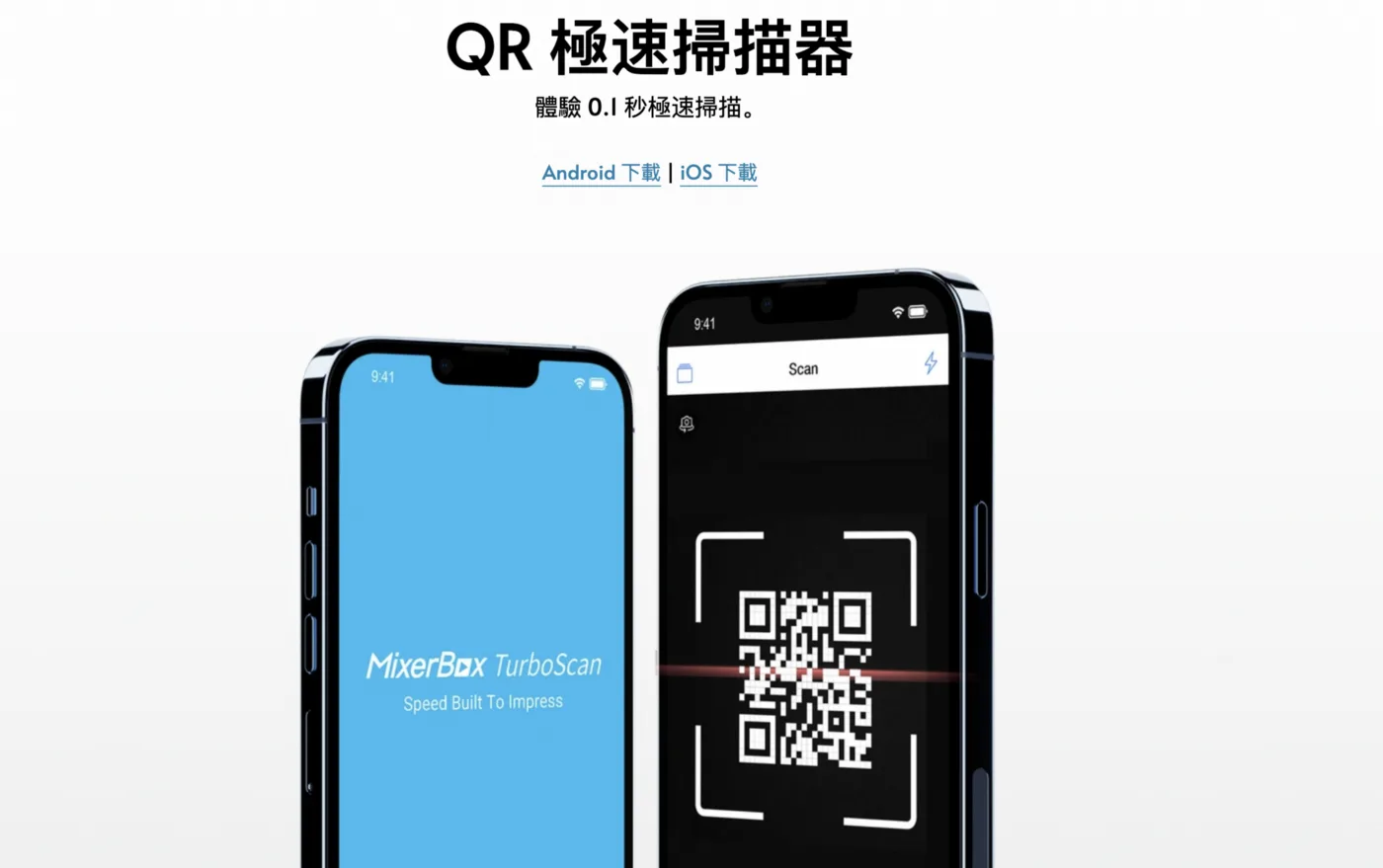
Eight years ago, right after graduating from National Taiwan University’s Department of Computer Science and Information Engineering, Eric joined MixerBox. On his very first day, CEO John gave him a task — to single-handedly build a QR code scanner that was faster, more accurate and delivered better results than anything else on the market.
“At the time, I thought of that first task as sort of a practice exercise and didn’t think too much about it. I didn’t expect the results to turn out pretty well,” Eric says modestly.
In fact, the task was a surprise success. MixerBox’s “TurboScan QR Scanner” went on to hit a record of 2.27 million downloads in a single month, and to this day it has large user bases not only in Taiwan but also in the U.S., Japan and Europe.
A new project he and a group of colleagues originally dreamed up on their own time after work — a voice-chat dating app — was also pitched and granted company resources for development. It became a huge hit after launch, holding the No. 1 spot on Taiwan’s Android “Social” app chart for two straight years, and it continues to bring MixerBox steady users and revenue to this day.
All told, the projects he has led at MixerBox alone have now reached 100 million downloads worldwide, and that number keeps climbing. That puts him right up there with developers at other star startups in Silicon Valley.
That’s why Eric continues to lead MixerBox’s New Product Team today, constantly developing more wildly creative new products.
The Road to a World Bronze Medal at the International Olympiad in Informatics
Before joining MixerBox, Eric was already a regular winner at all kinds of programming and startup competitions.
Introduced to coding early on by his dad, he started building his own game guide websites in elementary school and eagerly answered other users’ questions on forums.
In high school, Eric was quickly recruited into a club famous at Kaohsiung Senior High School known as the “Official Leave Club” — a group of top prospects who were always taking official leave from classes to train full-time for programming competitions. As much as 70% of Eric’s high school life was spent training for competitions, and in the end he went to Egypt and won a bronze medal at the International Olympiad in Informatics. In college, he also took second place at the Vietnam regional of the ICPC International Collegiate Programming Contest.
Eventually, programming contests alone weren’t enough to satisfy his curiosity, so Eric started entering startup competitions. He teamed up with friends to build an app for sharing group photos from dinners out, even managed to get well-known restaurants to partner with them, and won the national championship at the 2012 TiC100 student startup competition.
In the end, he actually went ahead and started a company. Before he’d even graduated as a senior, he and two classmates, plus a student who had just come back from studying in the U.S., boldly joined forces as a team. They spent an entire year without drawing a salary, yet worked full days — even overtime — like full-time employees, and ultimately built Puffact, a social gathering platform that for a while really did attract quite a few people to use the app to host events.

Outside of work, one of Eric’s big passions is rock climbing, and he has even teamed up with colleagues to enter competitions (Photo Credit: Eric Chen)
To others, Eric looks like someone who has breezed through life on easy mode, which is how he’s racked up so many impressive achievements. But once you really talk with him, you discover that this tech guru often didn’t get a head start — yet he always ended up crossing finish lines he’d never even imagined at the outset.
For example, although he was selected for the national Olympiad in Informatics team in his senior year of high school, when he was first picked for competition training as a freshman, nearly all of his peers had been training since elementary and middle school. He was the only one who had never entered any competition, which left him far behind by comparison.
“I could feel the difference between those who had trained and those who hadn’t,” Eric says. Some classmates, thanks to plenty of past competition experience, were clearly ahead of him in how to prepare, competition techniques and thinking on their feet, while he was still figuring out the rules of the game.
But he didn’t let himself overthink it. Drawn purely by the joy of solving problems, he practiced for hours at home every day on top of his time at school. Whenever he couldn’t solve a problem, he’d get to school extra early the next day and wait for the others, eager to work out the solution together. After two years of this, he was the one who came out on top, making the national team and representing Taiwan abroad to win a medal.
It was the same when he joined MixerBox eight years ago.
At the time, MixerBox had been around for only two or three years. Although its user base was growing fast, it had practically no revenue to speak of. Eric reveals, “Back then we were running on investors’ money. In the early days, the company really could have gone under at any moment.”
Some of the top talents he had competed against at contests across Taiwan were off pursuing master’s degrees and PhDs at Ivy League schools in the U.S.; others joined big companies and were soon earning several million NT dollars a year. But none of that really bothered Eric, who was set on helping build an amazing startup.
“Back then I rarely thought about what would happen if the company went under. Every day I was thinking about how to develop things well so we could achieve the vision the company had set out,” he says.
“I’m just more of an optimist,” Eric admits. In his way of thinking, he rarely dwells on how hard something is; instead, he always asks whether it’s interesting.
This optimistic, positive attitude toward oneself, others and the world around them is also one of the most common personality traits among MixerBox employees.
Eight years later, what makes him happiest is not just that MixerBox has surpassed 300 million cumulative downloads and can offer some of the highest-paying jobs in Taiwan. More importantly, he remembers that before he joined the company, CEO John told him face to face: “MixerBox wants to build world-class apps that serve everyone.”
And “over these eight years, MixerBox has truly kept working in that direction. All the new products our team is developing now are built around that core — we haven’t forgotten where we started,” Eric says. “We’re really building things that each and every person will use. Users around the world, including my own parents, can use MixerBox’s services.”
・・ ・・ ・・