
The New York Times Picks: 5 AI Books You Should Read in 2024 | MixerBox AI Book Club
July 12, 2024
〈 MixerBox AI Book Club 〉
Imagine looking back from 2024 at the futuristic science fiction you were reading ten years ago: much of the technology that once seemed out of reach has already become reality. AI is changing our world at astonishing speed. To help readers make sense of this fast-moving field, New York Times contributor Stephen Marche wrote a piece recommending the following five AI books most worth reading in 2024.
Marche has long followed how technology affects society, including artificial intelligence and social media. His latest work is a political thriller, The Last Election, co-written with former U.S. presidential candidate Andrew Yang, who has Taiwanese roots. The novel combines Marche’s writing talent with Yang’s political insight to explore where American politics might be headed.
Starting with the classics is a great way to seize the opportunities of the AI era. MixerBox AI has put together this list of AI book recommendations to share with you. Reading the books Marche recommends can help you cut through the hype and the knee-jerk skepticism surrounding AI, and get a rational, careful understanding of it from many angles: technical development, social impact, ethical questions and the outlook for the future.
5 AI Books Recommended by The New York Times
Some say AI will completely transform every industry, others say it will bring catastrophic consequences, or both, and you need to figure out which right now.
Meanwhile, what exactly is AI? How does it work? Where did it come from? Where is it going? The answers to these basic questions are often buried in dry technical jargon that leaves people baffled. (14 AI Tools You Can Still Use for Free in 2024: The Complete Guide)
Before ChatGPT launched, it was pretty hard to get readers to care about AI. Even when OpenAI CEO Sam Altman went around calling for AI regulation, few people in power were willing to listen seriously. Editors dismissed it, and readers were even less interested. (Sam Altman’s 17 Pieces of Advice)
After ChatGPT launched, everyone had an opinion, but no one really understood it. The novelty and the anxiety spawned all sorts of scams that thrive on ignorance. The wild AI fantasies of science fiction movies (AI will start a world war, enslave humanity, or teach us the true nature of love) didn’t help either.
Under these circumstances, the appearance of any good reading on artificial intelligence is close to a miracle.
Books of this kind usually fall into two camps: “we’re all going to die” and “how to get rich.” You can tell which one it is just by looking at the cover. Ignore those. The good news is that once you filter out the hucksters, there are some excellent books on artificial intelligence.
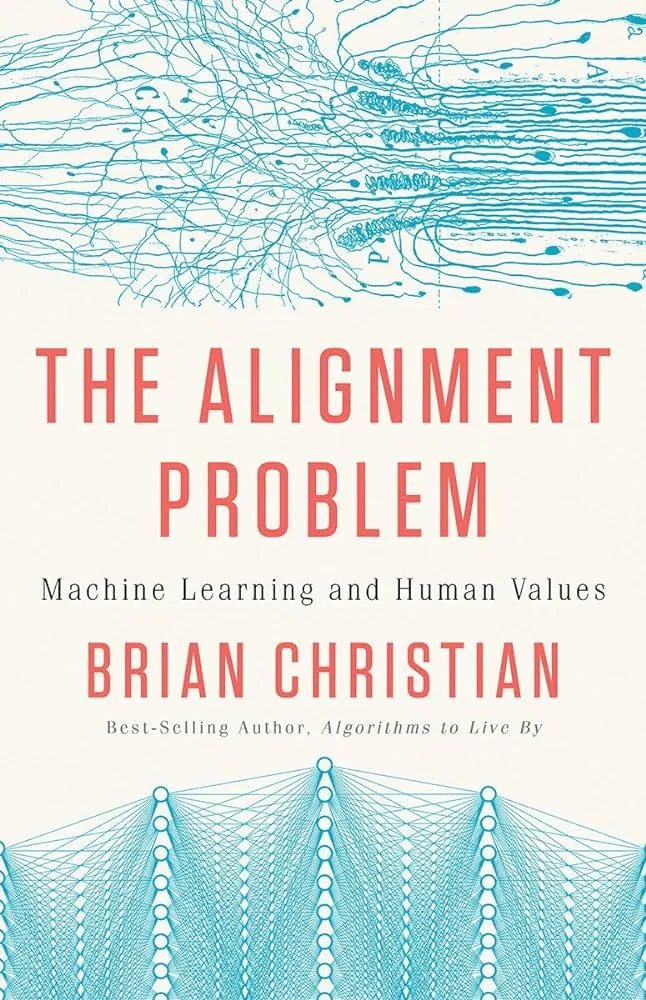
“The Alignment Problem: Machine Learning and Human Values”
Original title: The Alignment Problem: Machine Learning and Human Values
Author: Brian Christian
Published: 2020
If you’re only going to read one book about AI, make it this one. It came out in 2020, which in AI terms is practically prehistoric. Still, I think it’s fairer and more illuminating than most of the books published since. Its greatest value lies in its deep look at the computer scientists, cognitive psychologists and philosophers present at the birth of artificial intelligence. There’s simply no substitute for that kind of solid reporting.
Christian argues that the problem with AI isn’t that it will destroy the world. The problem is how to “align” machine behavior with human values, a challenge we’ve been attempting, and mostly failing at, since the invention of the cotton gin. As Christian writes: “As machine-learning systems grow not just increasingly pervasive but increasingly powerful, we will find ourselves more and more often in the position of the ‘sorcerer’s apprentice.’ We conjure a force, autonomous but totally compliant, give it a set of instructions, then scramble like mad to stop it once we realize our instructions are imprecise or incomplete—lest we get, in some clever, horrible way, precisely what we asked for.”
Christian has written two earlier books on the intersection of humans and computers, and he states the issue clearly: the problem lies not only with the machines but with the humans too. To align machines with human values, we have to know what human values are, and that understanding is fuzzy at best.
We cling to theories of fairness and transparency, but they grow murkier the moment we try to put them into practice. Although Christian is hopeful (the book is both a celebration of AI as a triumph of scientific progress and a manifesto for AI safety), he is also pragmatic. As he concludes: “Alignment will be messy. How could it be otherwise?”
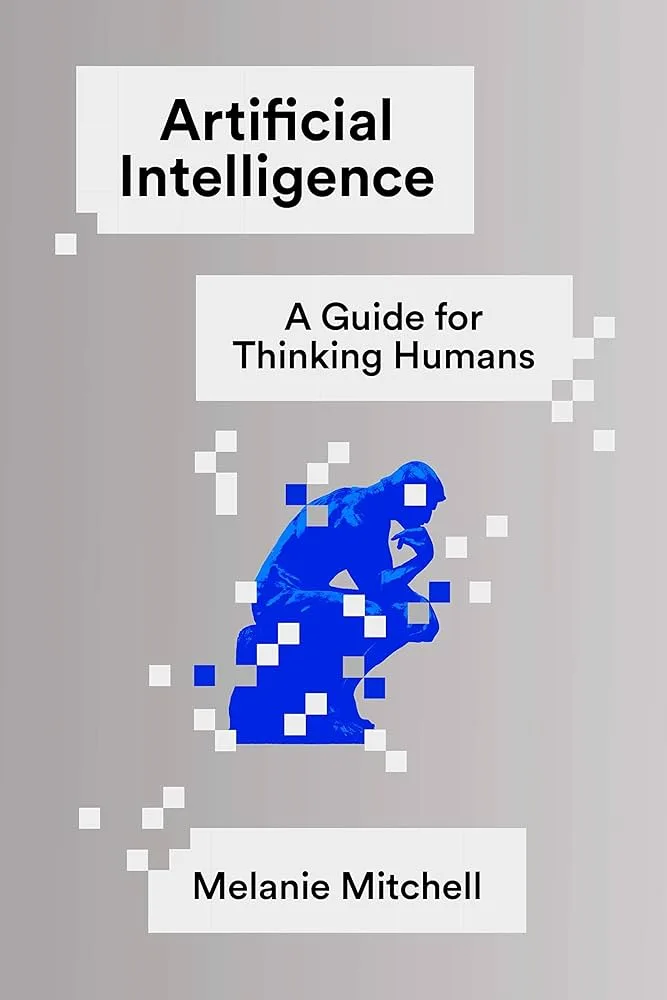
“Artificial Intelligence: A Guide for Thinking Humans”
Original title: Artificial Intelligence: A Guide for Thinking Humans
Author: Melanie Mitchell
Published: 2019
This is the Honda Civic of AI books. That’s a compliment. It’s reliable, durable, and gets you where you’re going without breaking a sweat.
The author is now a professor at Portland State University and the Santa Fe Institute, with long expertise in computer science and complex systems. Very few people who work in AI can also write fluent prose, which is one reason her book is so useful.
Artificial Intelligence: A Guide for Thinking Humans provides the essential history of the technology’s development, from psychologist Frank Rosenblatt and his perceptron (a simple neural network) in the 1950s, to Stanford computer scientist Fei-Fei Li and her ImageNet (a landmark visual database used to train intelligent machines).
Mitchell tells the story chronologically and in detail, covering the intellectual breakthrough of the Dartmouth group that coined the term “artificial intelligence” in the mid-1950s, through the emergence of natural language processing in the 2010s. She answers the basic questions about artificial intelligence with simplicity and elegance.
What’s more, Mitchell doesn’t paper over any of the confusion you run into when you look at AI honestly. She writes: “The field of AI is in turmoil. Either a huge amount of progress has been made, or almost none at all. Either we are within spitting distance of ‘true’ AI, or it is centuries away. AI will solve all our problems, put us all out of a job, destroy the human race, or cheapen our humanity.”
That’s not the kind of simplified take you’ll find in online comment sections. After reading Mitchell’s guide, you’ll understand what you don’t know, and what other people don’t know even when they claim they do. That kind of awareness is priceless.
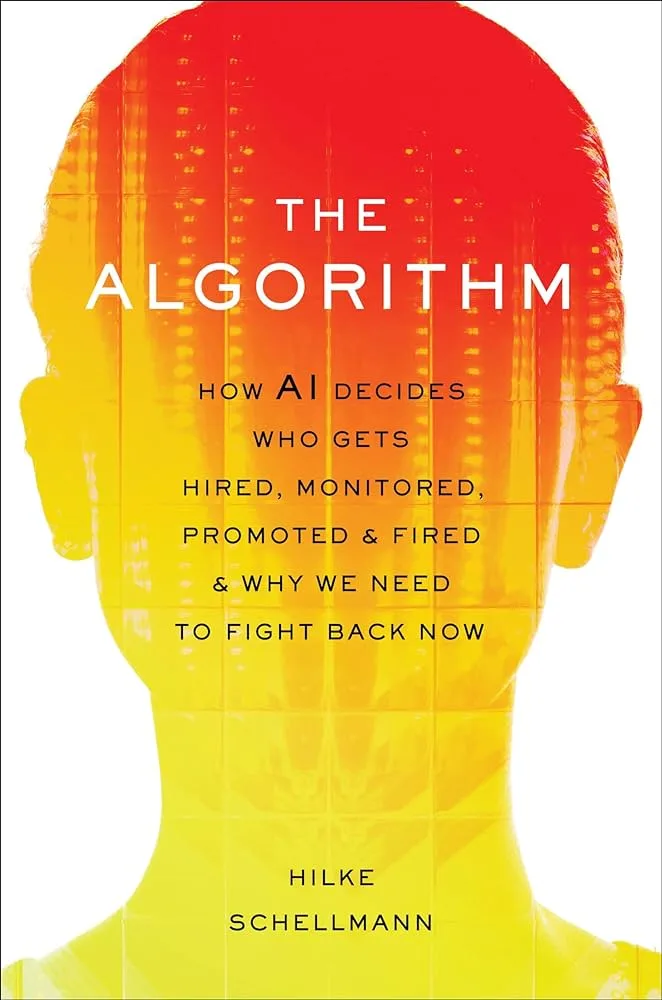
“The Algorithm: How AI Decides Who Gets Hired, Monitored, Promoted, and Fired ”
Original title: The Algorithm: How AI Decides Who Gets Hired, Monitored, Promoted, and Fired and Why We Need to Fight Back Now
Author: Hilke Schellmann
Published: 2024
Bad title, right? I mean, at this point a book called The Algorithm could be about anything. My guess is the title is so vague because the subject might not sound appealing at first glance. What could be more boring than a book about HR departments using artificial intelligence? But if you want to understand the details of the alignment problem (how people are actually dealing with it), The Algorithm is the best case study available.
Human resources is an excellent entry point for digging into the problems of AI, because it involves so many different practices: recruiting, evaluating, monitoring and retaining employees. The theoretical benefits of AI are obvious: greater efficiency and less human bias. Equally obvious is the potential for abuse.
Schellmann is an assistant professor of journalism at New York University and an Emmy-winning investigative reporter. She describes both sides in depth and with a steady hand. The book’s greatest strength is that it treats AI as a tool that humans use, steering clear of grand theories and wild fantasies and focusing instead on the details.
She began her investigation with great hope for the new technology; after all, humans aren’t exactly great at handling people. She writes: “When I started researching AI in the workplace, I was really excited. ‘Finally,’ I thought, ‘there’s a way to solve the problem of biased human hiring.’”
By the end, though, her enthusiasm had faded: “At least some of the tools that people and companies use to make hiring decisions don’t work. At least some companies are making major hiring decisions based on biased, garbage algorithms, causing real harm and keeping qualified people from getting jobs.”
Humans were never very good at making decisions to begin with, but AI hasn’t freed us from our human limitations; instead, it has tied us to them even more tightly.
The nightmares Schellmann describes (facial recognition software used in hiring decisions, and the trend toward total employee surveillance) are creepier than any doomsday scenario, because they are actually happening. At times, The Algorithm reminded me of a digital version of what Charlie Chaplin endures in Modern Times, with our minds rather than our bodies being pulled and twisted by complex gears.
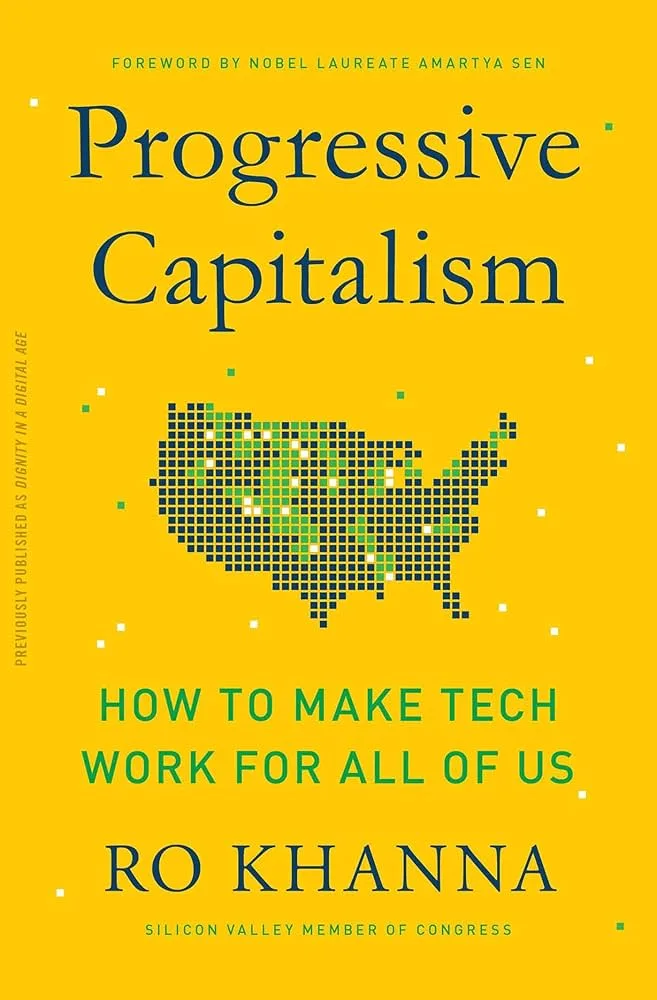
“Progressive Capitalism: How to Make Tech Work for All of Us”
Original title: Progressive Capitalism: How to Make Tech Work for All of Us
Author: Ro Khanna
Published: 2022
The alignment problem is, at its core, a political problem. Any meaningful response to AI has to be collective. But who will that collective be? The idea that Silicon Valley can regulate itself is a bad joke by now, and the U.S. government doesn’t seem any better equipped to do it. Fortunately, Khanna, the Democrat who represents California’s 17th congressional district, offers some clues about what a serious political response to AI might look like.
Progressive Capitalism is a book by a politician, so it’s full of the politician’s standard set pieces (visits to coal towns you’ve never heard of) and rhetorical moves (boiling unimaginably complex issues down into easy-to-digest five-point plans). But if you skip the filler, Khanna offers some of the strongest proposals for dealing with the economic and social upheaval that inevitably comes with a shift to new technology.
He writes: “While we allowed the internet to emerge without a strong ethical or legal framework, we should not make the same mistake as artificial intelligence emerges.” He cites a PwC report concluding that by 2030, AI will add more than $15 trillion to global GDP, but he points out that almost all of that value will flow to a tiny handful of people. (He adds that currently only 0.0006% of U.S. venture capital goes to Black women.)
Khanna proposes building “tech hubs” in the Midwest and South to spread the benefits (by supporting research and job training) while keeping a pro-growth attitude. He places special emphasis on preventing data discrimination, which may be AI’s most socially destructive element. He writes: “Ultimately, there must be clear rules that impose liability on institutions that use personal data in discriminatory ways or rely on algorithms that exacerbate disparities based on race, gender, or other demographic factors.” Without such protections, algorithms will only amplify the human flaws already widespread in the tech industry.
These days, hardly anyone turns to American political institutions to figure out what’s going on or what to do about it. Trust in Congress is collapsing, and even at the best of times, members of Congress have shown a rather limited understanding of technological change. But Khanna knows what he’s talking about, and it’s reassuring to realize that at least one person in Congress gets it.

“ AI 2041: Ten Visions for Our Future ”
Authors: Kai-Fu Lee and Chen Qiufan
Published: 2021
Anyone writing about artificial intelligence has to speculate; that’s the nature of the subject. But AI always humiliates predictions. (In 2018, Kai-Fu Lee predicted that China would dominate the field, and the arrival of ChatGPT promptly proved him wrong.) Still, not speculating would be too dull, and AI 2041 is a self-aware pleasure.
Kai-Fu Lee is a Taiwan-born, U.S.-educated venture capitalist, a major figure in China’s AI scene, and a former president of Google China. He supplies the book’s intellectual foundation, but he wisely teamed up with a real writer, Chen Qiufan, a well-known author of realist science fiction, who lays out the visions of the future. Each chapter opens with a story by Chen, followed by Lee’s explanation of the key concepts. This approach separates fantasy from verifiable information, which benefits both. The nonfiction doesn’t lie. The fiction is backed by facts.
The range of speculation is impressive too, spanning continents and technologies. A Nigerian video producer makes deepfakes. Korean orphans learn from cartoonish AI tutors. In Sri Lanka, self-driving vehicles have unexpected consequences. Lee’s commentary addresses the technological innovations that inspire each story: computer vision, natural language processing, Bitcoin security and more.
In other books, explanations of how AI works tend to be either dry and technical or childishly simplified; AI 2041 finds a clever way to avoid both pitfalls. It recognizes that the deeper effects of the AI revolution are essentially unknowable, and so it follows Amara’s Law: “We tend to overestimate the effect of a technology in the short run and underestimate the effect in the long run.”
AI Reading List: A Starting Point into the World of AI
AI is far more than the fear and greed that dominate the current conversation. AI is marvelous, mysterious and profound, and not at all easy to understand. The more definitive or absolute a writer claims to be, the less you should trust their work. The books on this list are just your starting point into the world of AI.
These five books have the humility needed to handle these fascinating uncertainties. They all reveal the strangest thing about artificial intelligence: its problems are really human problems. That’s the ultimate irony of new technology. AI’s real gift may be that it reveals the limits and flaws of humans, not of machines.
Try the latest MixerBox AI for free
👉👉 Source:
https://www.nytimes.com/2024/01/31/books/review/artificial-intelligence-best-books.html
👉👉 More reading:
Sam Altman’s 17 Pieces of Advice
Jensen Huang on Running and Succeeding in Business in the AI Era